
Buddhism
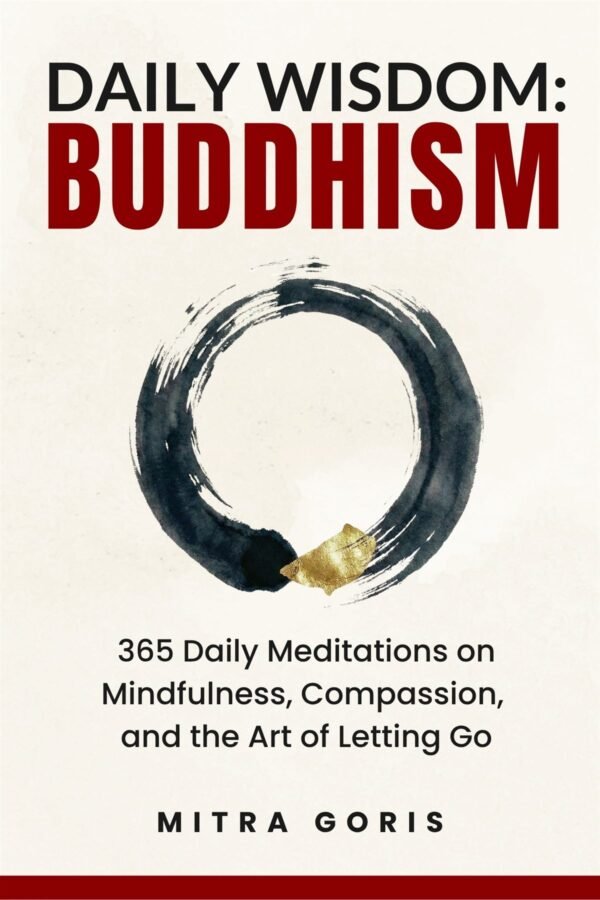
Daily Wisdom: Buddhism
365 Meditations on Mindfulness, Compassion, and the Art of Letting Go
Daily Wisdom: Buddhism is a 365-day secular reading book by Mitra Goris that distills Buddhist teaching into one page a day.
The Insight The Pause Daily Mantra
4.9 out of 5, from 70 readers on Amazon·number 5 in Buddhist Rituals & Practice
As an Amazon Associate, Daily Wisdom Books earns from qualifying purchases. Links to the bookshop are affiliate links, which means a purchase made through one costs you nothing extra and pays a small commission here.
What is inside
Three hundred and sixty-five days on the practical core of Buddhism: attachment and what it costs, impermanence and what accepting it actually changes, compassion as a practice rather than a feeling, and attention as something you can train.
This volume is structured slightly differently from the rest of the series. Its sections are named The Insight, The Pause, and Daily Mantra, and unlike the Tao, Stoicism and Bhagavad Gita volumes it does not open each day with a quoted passage. If the quoted passage is the part of the series you want, start with one of those three.
Who this book is for
This book is for the reader who is holding on. To a version of a conversation. To how things were supposed to go. To a person who has already left.
There is no religion in it. No refuge, no rebirth, no requirement to believe anything. Buddhism has a psychological core that works whether or not you accept its cosmology, and that core is what this book uses.
What sources does this book use?
Daily Wisdom: Buddhism quotes only public domain translations, and names the translator on every passage. Every source below can be read for free in full.
| Work | Translator |
|---|---|
| The Dhammapada | F. Max Müller |
The Dhammapada is free to read in full in Müller’s translation. If you want to read further into the tradition, Daily Wisdom: Tao covers the other half of what Zen inherited, since Zen grew from Buddhism meeting Taoism in China.
Frequently asked
Do I have to be Buddhist to read this?
No. Nothing in the book asks you to believe anything, take refuge, or accept any claim about rebirth. It uses the psychological material and leaves the cosmology alone.
Does each day open with a passage, like the other volumes?
No, and this is the one real structural difference in the series. This volume opens each day with The Insight rather than a quoted passage. The Stoicism, Tao and Bhagavad Gita volumes all open with a passage from their public domain source.
Is meditation required?
No. The Pause is a short practice, usually under two minutes, and most of them are not seated meditation at all.
4.9 out of 5, from 70 readers on Amazon·number 5 in Buddhist Rituals & Practice
If that sounds like the year you want, it is one page a day starting whenever you open it.
As an Amazon Associate, Daily Wisdom Books earns from qualifying purchases. Links to the bookshop are affiliate links, which means a purchase made through one costs you nothing extra and pays a small commission here.
The facts: formats, length, sources, ISBN
| Title | Daily Wisdom: Buddhism |
|---|---|
| Series | Daily Wisdom Books, book 1 |
| Author | Mitra Goris |
| Formats | Kindle, Paperback, Hardcover, Audiobook |
| Pages | 408 |
| Published | 7 January 2026 |
| Reading time | About five minutes per day, 365 days |
| Sources | The Dhammapada, F. Max Müller translation |
| ISBN | 9798242978294 (paperback), 9798243744775 (hardcover) |
Is there a companion journal?
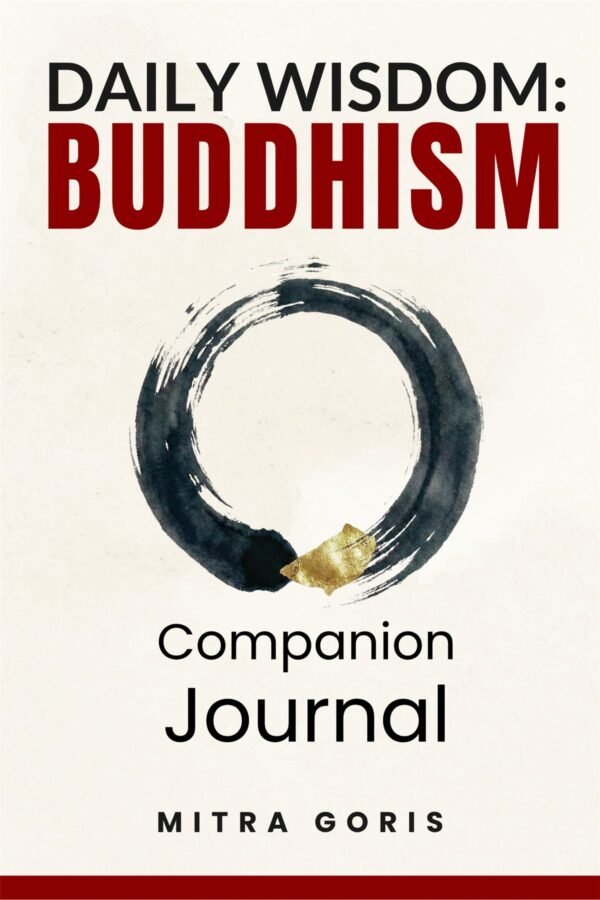
Yes. Daily Wisdom: Buddhism, Companion Journal is the writing companion to Daily Wisdom: Buddhism, so the book itself stays one hundred percent reading rather than becoming a workbook.
The complete journal is free as a PDF, all three hundred and sixty-five days of it. No purchase needed. Readers of the book also get the glossary for the tradition, which the free journal does not include.
4.9 out of 5, from 70 readers on Amazon·number 5 in Buddhist Rituals & Practice
Start Daily Wisdom: Buddhism whenever you like. There is no day one.
As an Amazon Associate, Daily Wisdom Books earns from qualifying purchases. Links to the bookshop are affiliate links, which means a purchase made through one costs you nothing extra and pays a small commission here.