
Stoicism
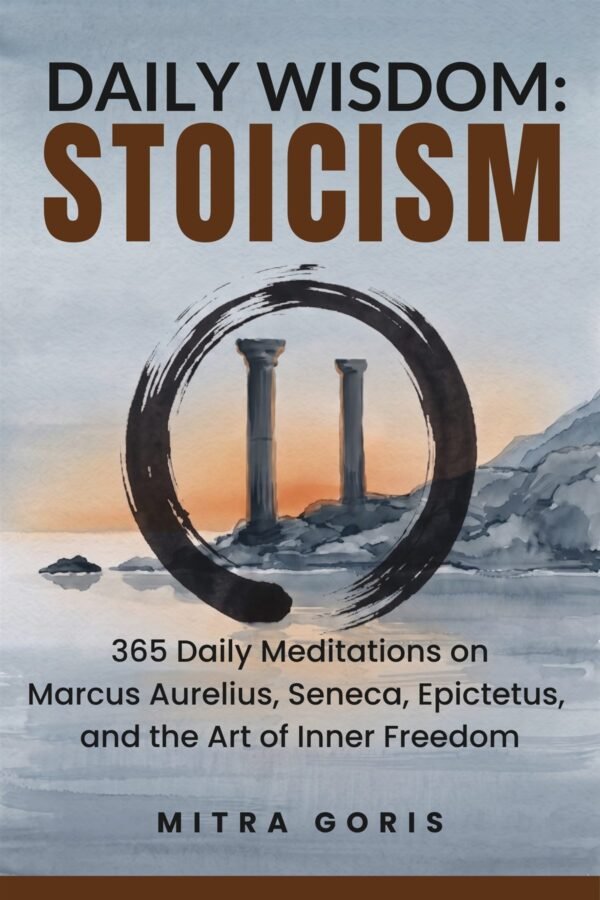
Daily Wisdom: Stoicism
365 Daily Meditations on Marcus Aurelius, Seneca, Epictetus, and the Art of Inner Freedom
Daily Wisdom: Stoicism is a 365-day secular reading book by Mitra Goris that distills Marcus Aurelius, Seneca and Epictetus into one page a day.
Insight Stoic Practice Daily Mantra
number 66 in Religious Studies, Philosophy
As an Amazon Associate, Daily Wisdom Books earns from qualifying purchases. Links to the bookshop are affiliate links, which means a purchase made through one costs you nothing extra and pays a small commission here.
What is inside
Stoicism has become one of the most talked-about philosophies of the last decade, and somewhere in that noise the actual practice got buried under hustle slogans and hard-man advice. This book goes back to what the three Stoics actually wrote.
Three hundred and sixty-five days, drawn from three sources. Marcus Aurelius writing privately to himself and never intending to be read. Seneca writing letters to a friend about time, anger and dying. Epictetus, born into slavery, teaching that the one thing nobody could take was his judgment about what was happening to him.
Who this book is for
This book is for the reader who reacts. Who loses an afternoon to an email, argues with traffic, and rehearses conversations that already happened. Stoicism’s central move is the dichotomy of control: sorting what is yours from what is not, then spending your energy only on the first pile. That sounds simple written down. It takes about a year of practice, which is what the 365 days are.
It is not for the reader who wants Stoicism as a personality. There are no cold plunges in here.
What does one day look like?
Each day opens with a passage, then Insight, then Stoic Practice, then Daily Mantra. Here is the shape.
You have power over your mind, not outside events. Realize this, and you will find strength.
Marcus Aurelius, Meditations, Book 8 (George Long translation, public domain)
The insight that follows puts that into a Tuesday. The practice is one small thing: at the next moment of irritation, name silently which pile the thing belongs in. The mantra is one line. Five minutes total.
What sources does this book use?
Daily Wisdom: Stoicism quotes only public domain translations, and names the translator on every passage. Every source below can be read for free in full.
| Work | Author | Translator |
|---|---|---|
| Meditations | Marcus Aurelius | George Long |
| Moral Letters to Lucilius | Seneca | Richard Mott Gummere |
| Discourses and Enchiridion | Epictetus | George Long |
All three are free to read in full. The Stoicism reading list links to them and explains which translation to pick if you want to go to the source.
Frequently asked
Do I need to know anything about Stoicism first?
No. Every day is self-contained and the ideas build without assuming you have read Meditations.
Is this the same as reading Meditations?
No, and it is not a substitute. Meditations is Marcus Aurelius’s private notebook, unstructured and repetitive by nature. This book is a year-long structure built from all three Stoics, with a practice attached to each day. If you want the original, the comparison of Meditations translations tells you which one to buy.
Can I start in the middle of the year?
Yes. Days are numbered 1 to 365, with no calendar dates.
number 66 in Religious Studies, Philosophy
If that sounds like the year you want, it is one page a day starting whenever you open it.
As an Amazon Associate, Daily Wisdom Books earns from qualifying purchases. Links to the bookshop are affiliate links, which means a purchase made through one costs you nothing extra and pays a small commission here.
The facts: formats, length, sources, ISBN
| Title | Daily Wisdom: Stoicism |
|---|---|
| Series | Daily Wisdom Books, book 3 |
| Author | Mitra Goris |
| Formats | Kindle, Paperback, Hardcover, Audiobook |
| Pages | 440 |
| Published | 15 June 2026 |
| Reading time | About five minutes per day, 365 days |
| Sources | Marcus Aurelius, Meditations, George Long translation; Seneca, Moral Letters to Lucilius, Richard Mott Gummere translation; Epictetus, Discourses and Enchiridion, George Long translation |
| ISBN | 9798184787145 (paperback), 9798187037766 (hardcover) |
Is there a companion journal?
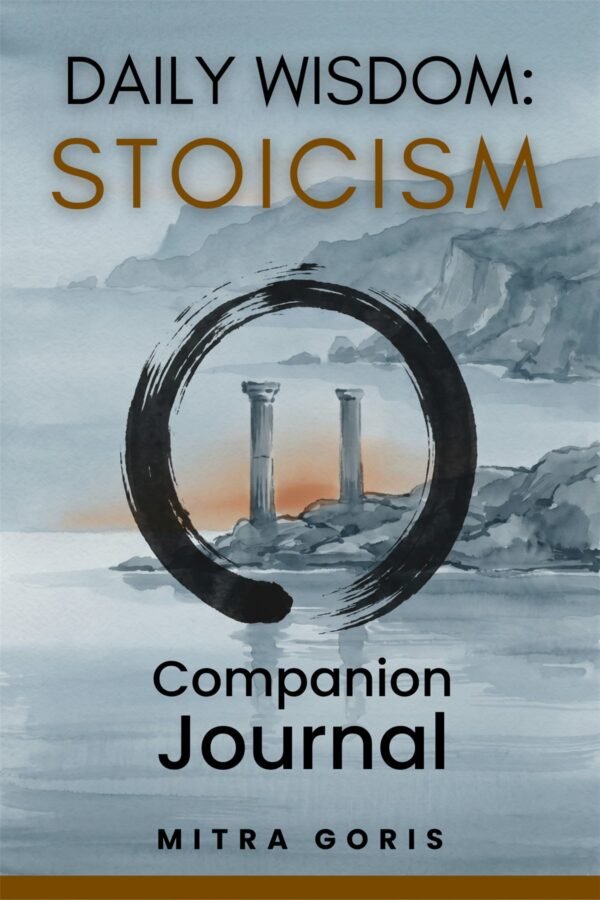
Yes. Daily Wisdom: Stoicism, Companion Journal is the writing companion to Daily Wisdom: Stoicism, so the book itself stays one hundred percent reading rather than becoming a workbook.
The complete journal is free as a PDF, all three hundred and sixty-five days of it. No purchase needed. Readers of the book also get the glossary for the tradition, which the free journal does not include.
number 66 in Religious Studies, Philosophy
Start Daily Wisdom: Stoicism whenever you like. There is no day one.
As an Amazon Associate, Daily Wisdom Books earns from qualifying purchases. Links to the bookshop are affiliate links, which means a purchase made through one costs you nothing extra and pays a small commission here.