
The best translation of Meditations, compared
For most first-time readers of Marcus Aurelius, Gregory Hays’s 2002 translation is the one to start with, because it reads like a person thinking rather than a Victorian sermon. If you want it free, George Long’s 1862 translation is in the public domain and complete online. Those two answers cover almost everybody.
Why does the translation matter so much for Meditations?
It matters more here than for almost any other ancient text, for a specific reason: Meditations was never written to be read. It is a private notebook, in Greek, by a Roman emperor writing to himself with no audience in mind and no intention of publishing.
That leaves translators with far more room than usual. The Greek is compressed, elliptical and sometimes ungrammatical, because a man writing a note to himself does not finish every thought. One translator resolves that into stately formal English. Another resolves it into something closer to how the thought probably felt. Both are defensible, and they produce books that read almost nothing alike.
The practical consequence: people who bounce off Meditations often bounced off a translation rather than off Marcus Aurelius.
The main translations compared
| Translator | Year | Register | Cost | Best for |
|---|---|---|---|---|
| George Long | 1862 | Victorian, formal, archaic pronouns | Free, public domain | Quoting, studying, and reading without spending anything |
| Gregory Hays | 2002 | Modern, plain, deliberately unpoetic | Paid | A first read, and for anyone who found older versions impenetrable |
| Martin Hammond | 2006 | Modern but more literal, heavily annotated | Paid | A second read, when you want to see the seams |
| Robin Waterfield | 2021 | Modern, scholarly, strong introduction | Paid | Readers who want the historical context alongside the text |
The same passage, four ways
PLACEHOLDER. This section is not finished. It needs one short passage set out in each of the four translations, with the modern three quoted only briefly and attributed. It is left empty rather than filled from memory, because putting words a translator did not write next to their name would be worse than having no comparison at all. Delete this paragraph once the real text is in.
Which should you actually buy?
Three readers, three answers.
- You have never read it and you want to finish it. Hays. It is the version most likely to survive contact with an actual evening.
- You want to spend nothing. Long, free and complete on Project Gutenberg. The English is dated, and it is a real translation by a serious scholar, not an abridgement.
- You have read it once and want to go deeper. Hammond or Waterfield. Both give you the apparatus that Hays deliberately strips out.
The three worth acting on, with what each one is for:
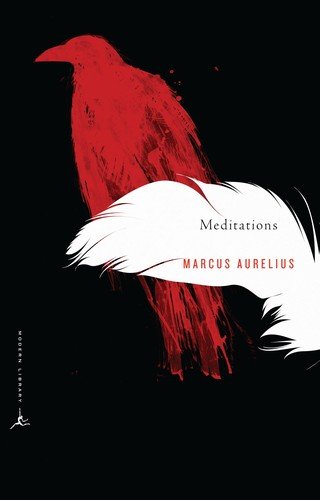
Meditations
Translated by Gregory Hays
Modern, plain and deliberately unpoetic. The right first read, and the one to hand anybody who bounced off an older version and assumed the fault was theirs.
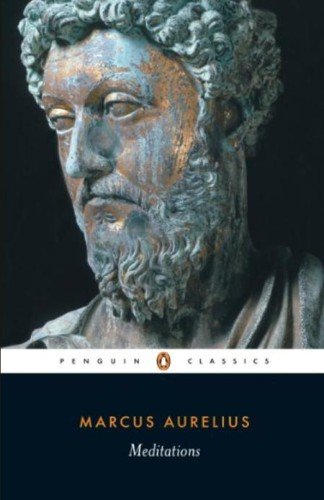
Meditations
Translated by Martin Hammond
Closer to the Greek and heavily annotated. The one to own if you want to know what Marcus wrote rather than how well it reads in English.
Meditations
Translated by George Long, 1862
Complete, public domain and free. Victorian and formal, which is a real barrier, but it can be quoted in full and pointed at, which is why this site uses it.
The part nobody warns you about
You have picked one. Now the thing that trips up most first readers, and it is not the Greek or the Stoicism.
Meditations was never written to be read. Marcus wrote it at night, on campaign, for himself, and he was not building an argument or leading anyone anywhere. He was talking himself down. That is why it repeats: he tells himself the same four or five things over and over across twelve books, because he kept needing to hear them. Read cover to cover it feels like the same page arriving again, and readers assume they have missed the point. They have not. There is no arc to miss.
Which means the format almost everybody uses is the wrong one. A private notebook of reminders, read in three sittings, is a book you agree with and forget. The same notebook read one entry at a time, on the mornings you actually need it, is the thing it was written to be.
So whichever translation you just chose, do not sit down and get through it. Keep it near where you drink coffee and read one piece. If you want that already laid out for a year, with the passage and one small thing to do with it, that is the book below. Not another translation of Marcus, and not a replacement for the ones above: a way of reading them that survives past February.
Ours
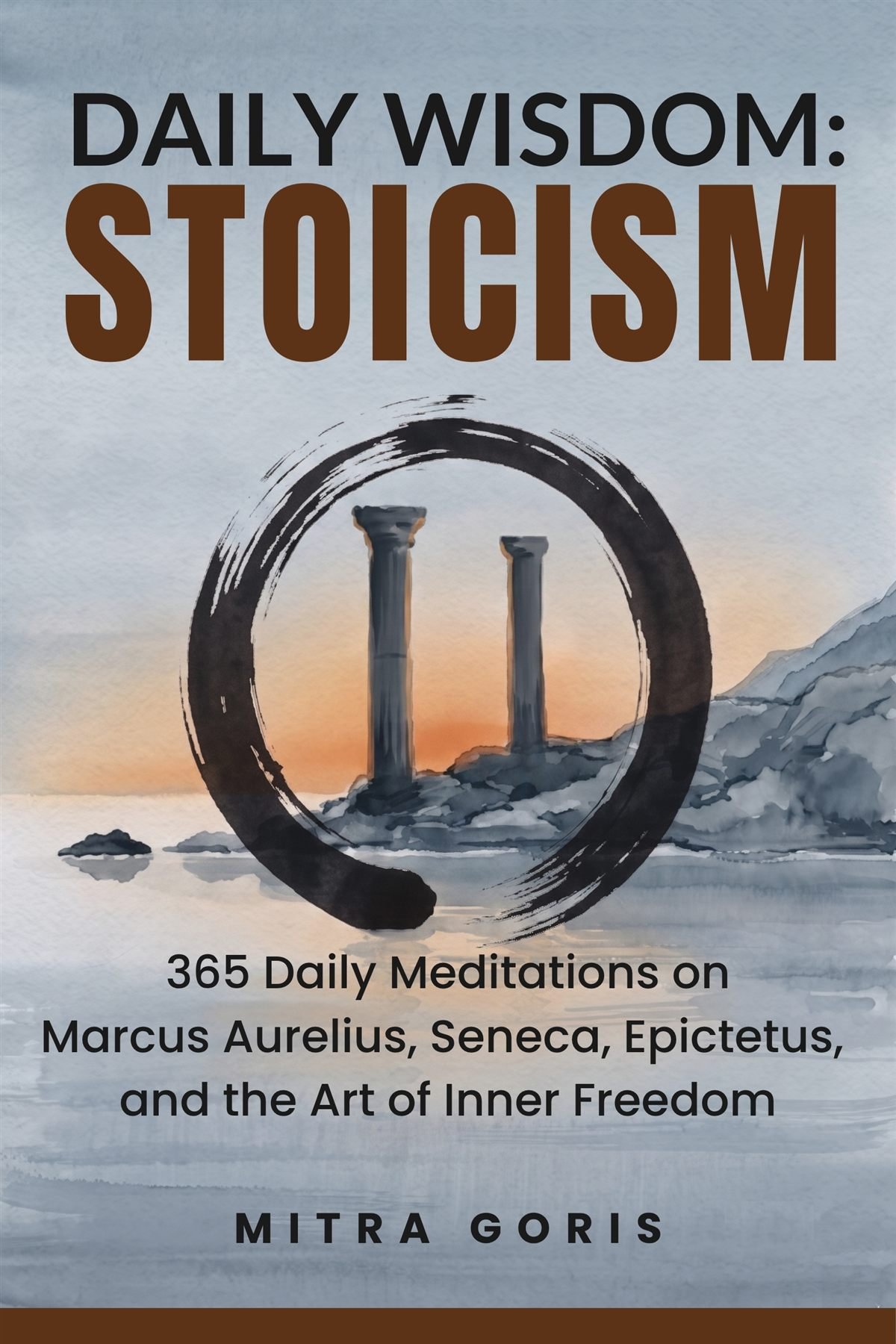
Daily Wisdom: Stoicism
Translated by Long, Seneca and Epictetus, one day at a time
Three hundred and sixty-five days drawn from Marcus, Seneca and Epictetus in the public domain translations: the passage, an Insight, a Stoic Practice and a Daily Mantra.
Where can you read Meditations free?
George Long’s translation is in the public domain and available complete on Project Gutenberg, at no cost and with no signup. It is the version quoted throughout this site, for the same reason: it can be quoted in full, and a source you cannot check is not much of a source.
How to read it without bouncing off
Three things help more than choosing the perfect translation.
- Start at Book 2, not Book 1. Book 1 is a list of thanks to relatives and teachers. It is touching once you know the man and baffling as an opening.
- Do not read it as an argument. It does not build. It circles, repeats and contradicts itself, because he was writing the same reminders to himself for years.
- A passage a day beats a chapter a night. The book was written in fragments and it survives being read in fragments better than almost anything else.
That last point is why the year-long version exists. Daily Wisdom: Stoicism takes Marcus Aurelius alongside Seneca and Epictetus across 365 days, one passage and one practice at a time, for readers who keep starting Meditations and stopping.