
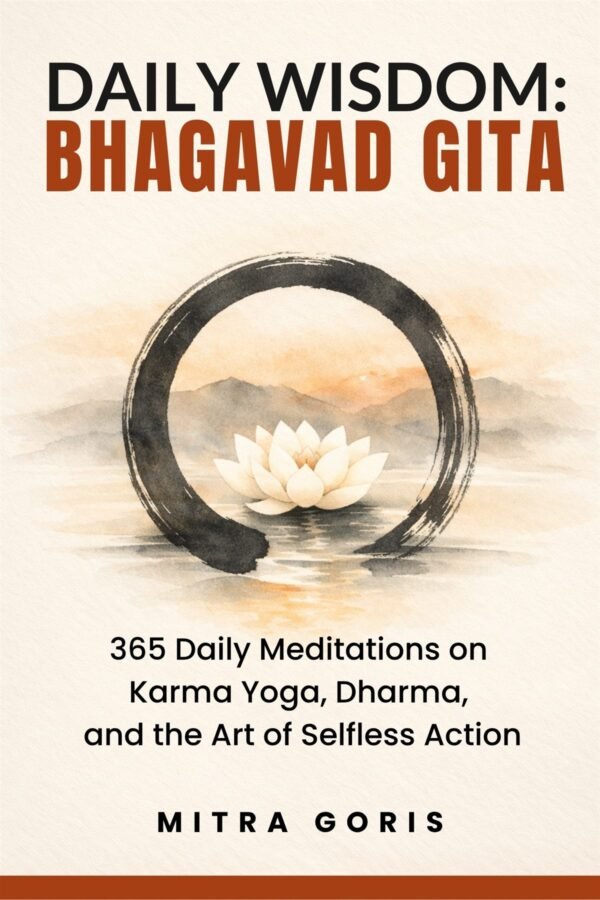
Bhagavad Gita
Daily Wisdom: Bhagavad Gita
365 Daily Meditations on Karma Yoga, Dharma, and the Art of Selfless Action
Daily Wisdom: Bhagavad Gita is a 365-day secular reading book by Mitra Goris that distills the Bhagavad Gita into one page a day.
Insight Gita Practice Daily Mantra
number 15 in Bhagavad Gita
As an Amazon Associate, Daily Wisdom Books earns from qualifying purchases. Links to the bookshop are affiliate links, which means a purchase made through one costs you nothing extra and pays a small commission here.
What is inside
The Bhagavad Gita is seven hundred verses long and it opens in an unexpectedly modern place: a capable, well-trained person standing at the edge of the thing he is supposed to do, unable to move.
Three hundred and sixty-five days on what the Gita actually offers that person. Karma yoga, which is the practice of acting fully while releasing your grip on how it turns out. Dharma, which is the question of what is actually yours to do. And the specific, unglamorous discipline of doing the work in front of you when you cannot guarantee it will work.
Who this book is for
This book is for the reader who is frozen. Who can see the thing that needs doing and cannot start it, because starting means accepting that the outcome is not yours.
It is written for a secular reader. You do not need to be Hindu, and you do not need to accept anything about Krishna as a divine figure, to use the Gita. It has been read as practical philosophy by people outside the tradition for two centuries.
What does one day look like?
Let right deeds be thy motive, not the fruit which comes from them.
The Song Celestial, 2.47, translated by Sir Edwin Arnold (public domain)
Then Insight, Gita Practice, Daily Mantra.
Where a day paraphrases rather than quotes, the book marks it “After the Bhagavad Gita, 3.15”, so you always know whether you are reading a translation or an interpretation.
What sources does this book use?
Daily Wisdom: Bhagavad Gita quotes only public domain translations, and names the translator on every passage. Every source below can be read for free in full.
| Work | Translator |
|---|---|
| The Song Celestial | Sir Edwin Arnold |
| The Bhagavadgita | Kashinath Trimbak Telang |
Both are free to read in full. The comparison of Bhagavad Gita translations puts them side by side and covers the modern versions this book could not quote.
Frequently asked
Do I need to be Hindu to read this?
No. The book treats the Gita as practical philosophy and does not ask you to accept any religious claim.
Is this a translation of the Bhagavad Gita?
No. It quotes public domain translations and builds a year of daily reading around them. Direct quotations name their translator, and paraphrases are marked as paraphrases.
number 15 in Bhagavad Gita
If that sounds like the year you want, it is one page a day starting whenever you open it.
As an Amazon Associate, Daily Wisdom Books earns from qualifying purchases. Links to the bookshop are affiliate links, which means a purchase made through one costs you nothing extra and pays a small commission here.
The facts: formats, length, sources, ISBN
| Title | Daily Wisdom: Bhagavad Gita |
|---|---|
| Series | Daily Wisdom Books, book 4 |
| Author | Mitra Goris |
| Formats | Kindle, Paperback, Hardcover, Audiobook |
| Pages | 432 |
| Published | 1 August 2026 |
| Reading time | About five minutes per day, 365 days |
| Sources | The Song Celestial, Sir Edwin Arnold translation; The Bhagavadgita, Kashinath Trimbak Telang translation |
| ISBN | 9798187834136 (paperback), 9798188599959 (hardcover) |
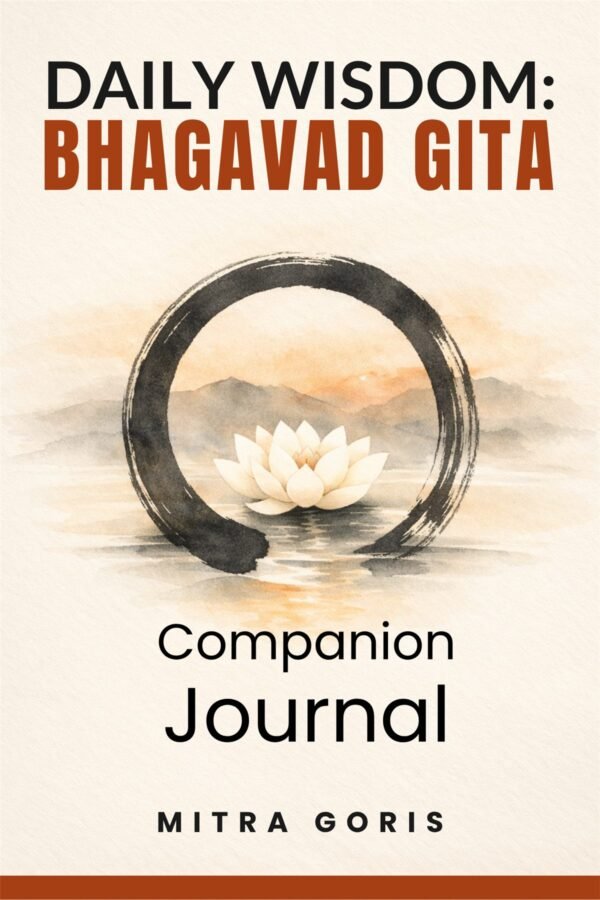
Is there a companion journal?
Yes. Daily Wisdom: Bhagavad Gita, Companion Journal is the writing companion to Daily Wisdom: Bhagavad Gita, so the book itself stays one hundred percent reading rather than becoming a workbook.
The complete journal is free as a PDF, all three hundred and sixty-five days of it. No purchase needed. Readers of the book also get the glossary for the tradition, which the free journal does not include.
number 15 in Bhagavad Gita
Start Daily Wisdom: Bhagavad Gita whenever you like. There is no day one.
As an Amazon Associate, Daily Wisdom Books earns from qualifying purchases. Links to the bookshop are affiliate links, which means a purchase made through one costs you nothing extra and pays a small commission here.