
Taoism
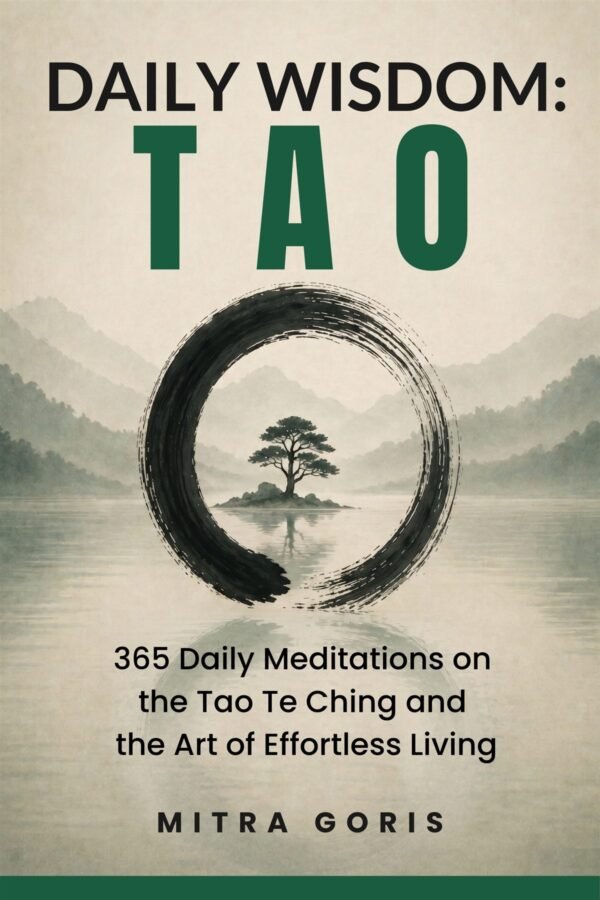
Daily Wisdom: Tao
365 Daily Meditations on the Tao Te Ching and the Art of Effortless Living
Daily Wisdom: Tao is a 365-day secular reading book by Mitra Goris that distills the Tao Te Ching into one page a day.
The Way The Practice Daily Intention
4.6 out of 5, from 13 readers on Amazon·number 11 in Tao Te Ching
As an Amazon Associate, Daily Wisdom Books earns from qualifying purchases. Links to the bookshop are affiliate links, which means a purchase made through one costs you nothing extra and pays a small commission here.
What is inside
The Tao Te Ching is eighty-one short chapters, about five thousand characters in the original, and it has been translated into English more than two hundred times. It is also, read cold, genuinely confusing. It contradicts itself on purpose.
This book takes those eighty-one chapters and gives them 365 days to unfold, so an idea gets four or five different angles across the year rather than one dense paragraph you nod at and forget.
Its sections are named The Way, The Practice and Daily Intention, which is this volume’s own vocabulary rather than the wording used in the Stoicism and Bhagavad Gita volumes.
Who this book is for
This book is for the reader who is trying very hard and getting nowhere. Who treats every problem as something to push through, and is exhausted.
Wu wei, the Tao Te Ching’s central practical idea, is usually translated as “effortless action” or “non-doing”, and both translations mislead. It does not mean doing nothing. It means the difference between rowing upstream and steering downstream. Most of the effort you are spending is friction, not progress. A year of this book is a year of noticing where.
What does one day look like?
The softest thing in the world dashes against and overcomes the hardest.
Lao Tzu, Tao Te Ching, chapter 43 (James Legge translation, 1891, public domain)
Then The Way, which unpacks it. Then The Practice, one small thing. Then a Daily Intention, one line.
What sources does this book use?
Daily Wisdom: Tao quotes only public domain translations, and names the translator on every passage. Every source below can be read for free in full.
| Work | Translator |
|---|---|
| Tao Te Ching | James Legge |
Legge is not the most poetic English Tao Te Ching, and this book does not pretend otherwise. It was chosen because it is scholarly, close to the Chinese, and legally free to quote in full, which the famous modern versions are not. If you want a more literary reading version alongside it, the comparison of Tao Te Ching translations covers the main ones honestly, including the ones this book could not use.
Frequently asked
Is this a translation of the Tao Te Ching?
No. It quotes Legge’s translation and builds a year of daily reading around it. If you want the complete text on its own, it is free, and the chapter-by-chapter commentary links straight to it.
Do I need to read the Tao Te Ching first?
No.
What is the difference between Taoism and Zen?
They are related but separate. Zen, or Chan, grew from Buddhism meeting Taoism in China, so it shares Taoism’s suspicion of overexplaining and Buddhism’s meditative core. Daily Wisdom: Buddhism covers the other half of that inheritance.
4.6 out of 5, from 13 readers on Amazon·number 11 in Tao Te Ching
If that sounds like the year you want, it is one page a day starting whenever you open it.
As an Amazon Associate, Daily Wisdom Books earns from qualifying purchases. Links to the bookshop are affiliate links, which means a purchase made through one costs you nothing extra and pays a small commission here.
The facts: formats, length, sources, ISBN
| Title | Daily Wisdom: Tao |
|---|---|
| Series | Daily Wisdom Books, book 2 |
| Author | Mitra Goris |
| Formats | Kindle, Paperback, Hardcover, Audiobook |
| Pages | 436 |
| Published | 1 May 2026 |
| Reading time | About five minutes per day, 365 days |
| Sources | Tao Te Ching, James Legge translation |
| ISBN | 9798195590284 (paperback), 9798196209956 (hardcover) |
Is there a companion journal?
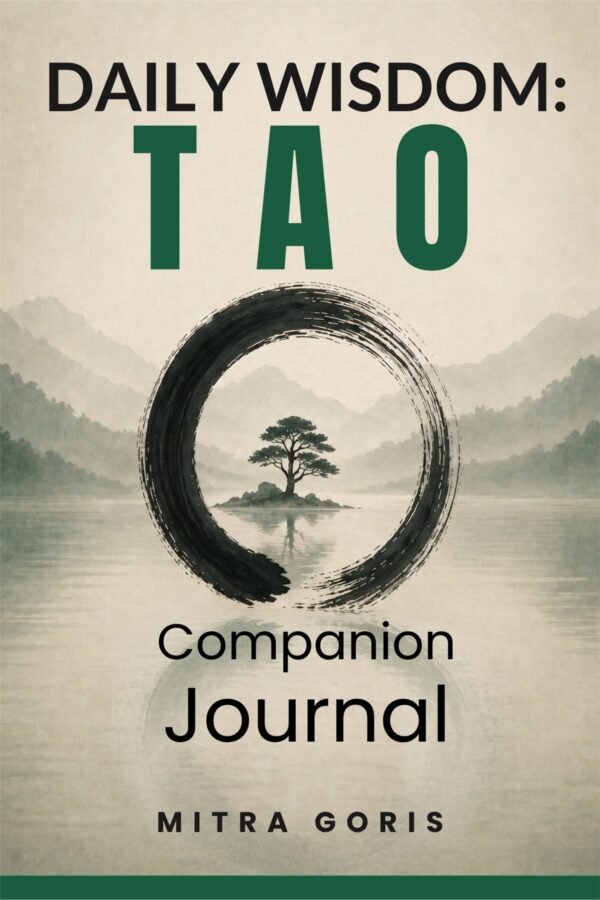
Yes. Daily Wisdom: Tao, Companion Journal is the writing companion to Daily Wisdom: Tao, so the book itself stays one hundred percent reading rather than becoming a workbook.
The complete journal is free as a PDF, all three hundred and sixty-five days of it. No purchase needed. Readers of the book also get the glossary for the tradition, which the free journal does not include.
4.6 out of 5, from 13 readers on Amazon·number 11 in Tao Te Ching
Start Daily Wisdom: Tao whenever you like. There is no day one.
As an Amazon Associate, Daily Wisdom Books earns from qualifying purchases. Links to the bookshop are affiliate links, which means a purchase made through one costs you nothing extra and pays a small commission here.