Daily Wisdom: Buddhism
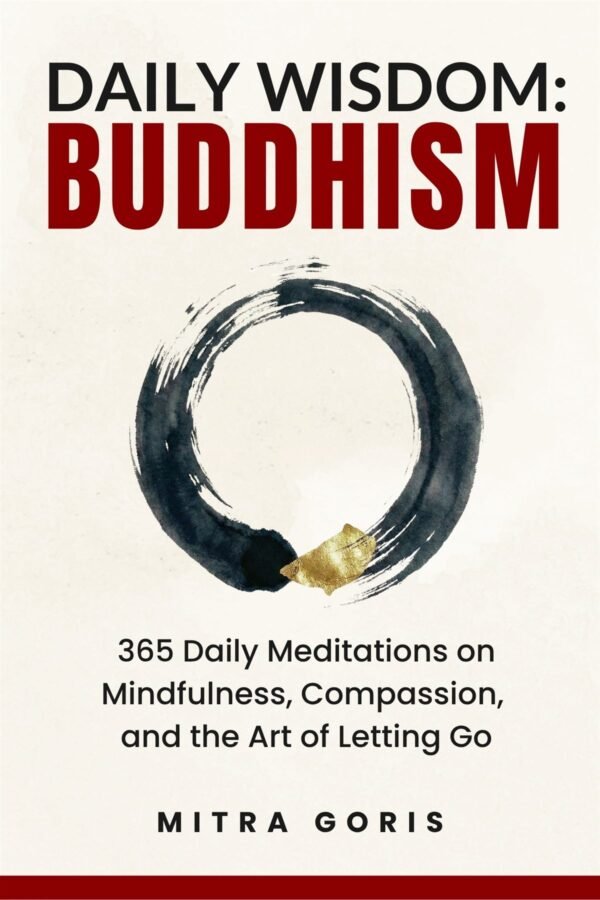
365 Meditations on Mindfulness, Compassion, and the Art of Letting Go

The series
Daily Wisdom Books is a series of 365-day secular reading books by Mitra Goris. Each volume takes one wisdom tradition and distills it into a single page a day: a passage from the public-domain source, an insight, a small practice, and one line to carry. Four volumes are published. Each one stands alone and any one is a valid place to start.
365 Meditations on Mindfulness, Compassion, and the Art of Letting Go
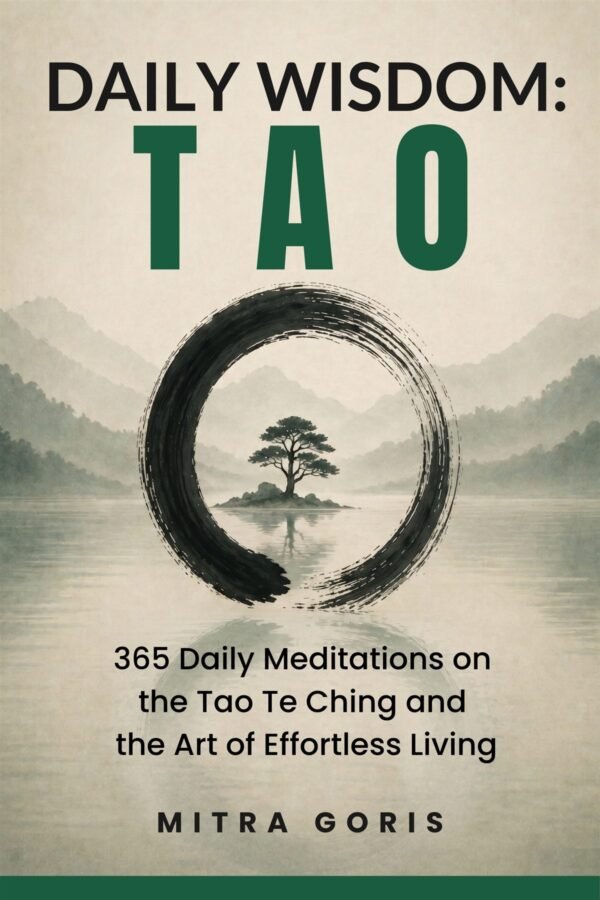
365 Daily Meditations on the Tao Te Ching and the Art of Effortless Living
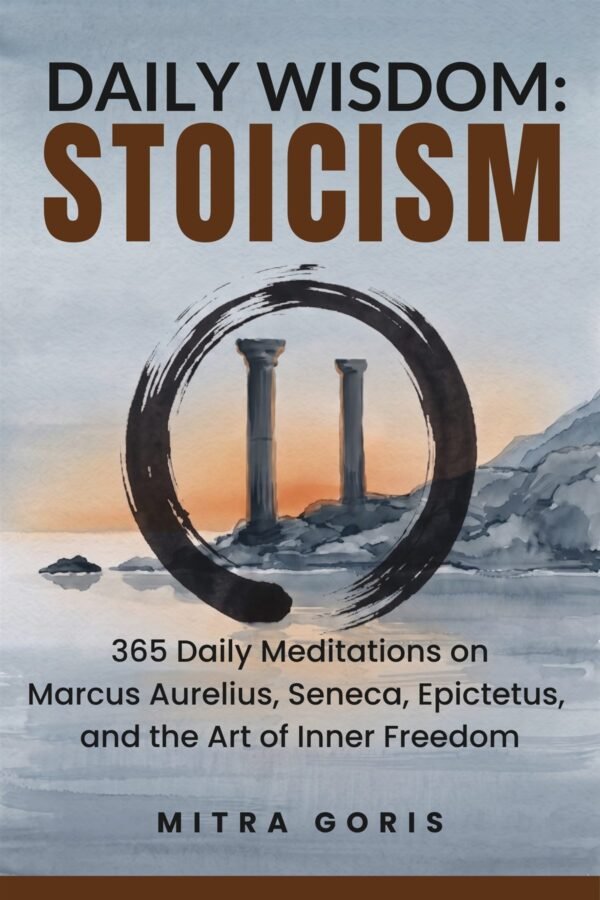
365 Daily Meditations on Marcus Aurelius, Seneca, Epictetus, and the Art of Inner Freedom
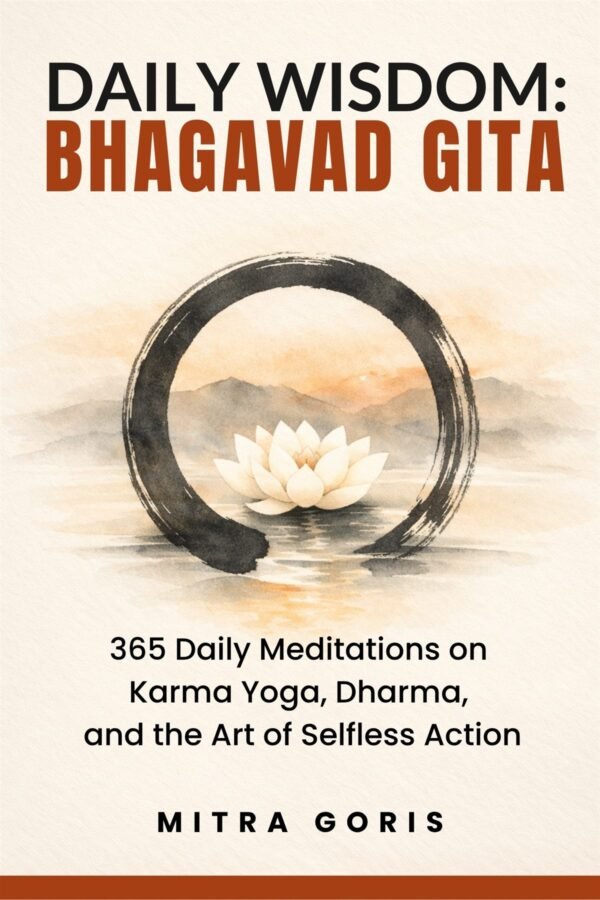
365 Daily Meditations on Karma Yoga, Dharma, and the Art of Selfless Action
Each of the 365 days occupies one page and follows the same shape.
The four volumes do not all use the same words for those sections, and one of them does not open with a passage at all. Here is what each book actually prints.
| Volume | Opens with a passage | Sections, as printed |
|---|---|---|
| Daily Wisdom: Buddhism | No | The Insight, The Pause, Daily Mantra |
| Daily Wisdom: Tao | Yes | The Way, The Practice, Daily Intention |
| Daily Wisdom: Stoicism | Yes | Insight, Stoic Practice, Daily Mantra |
| Daily Wisdom: Bhagavad Gita | Yes | Insight, Gita Practice, Daily Mantra |
Daily Wisdom books quote only public-domain translations, and name the translator on every passage. That is a deliberate constraint, not a budget one: it means every source in every book can be read for free in full, and the reading lists on this site link straight to them.
| Volume | Source text | Translator |
|---|---|---|
| Buddhism | The Dhammapada | F. Max Müller |
| Tao | Tao Te Ching | James Legge, 1891 |
| Stoicism | Meditations, Moral Letters to Lucilius, Discourses and Enchiridion | George Long, Richard Mott Gummere, George Long |
| Bhagavad Gita | The Song Celestial, The Bhagavadgita | Sir Edwin Arnold, K. T. Telang |
Where the wording is a paraphrase rather than a direct quotation, the book says so, using the form “After the Bhagavad Gita, 3.15”.
No. There are no dates printed in these books, only day numbers from 1 to 365. Start on a Tuesday in March if that is when you picked it up. Miss four days and pick up where you left off. Nothing in the structure punishes you for it.
The same author writes The 30-Day Shift, a series of practical psychology programs that take one specific problem and work through it in thirty days. Different length, different method, different purpose.