
Which Dhammapada translation should you read first?
The Dhammapada is four hundred and twenty-three verses, it exists in dozens of English versions, and several of them disagree with each other about what the very first line says. Not the tone of it. The claim it makes.
Verse 1, in three translations
This is the most quoted passage in the book, and the fastest way to see what you are choosing between. All three are working from the same Pali.
All that we are is the result of what we have thought: it is founded on our thoughts, it is made up of our thoughts.
F. Max Muller, 1881
Mind precedes all mental states. Mind is their chief; they are all mind-wrought.
Acharya Buddharakkhita
Phenomena are preceded by the heart, ruled by the heart, made of the heart.
Thanissaro Bhikkhu
Read those again slowly. Muller says you are the sum of your thinking, which is a claim about the self. Buddharakkhita says mind comes before mental states, which is a claim about causation inside the mind and nothing about who you are. Thanissaro will not even use the word mind: the Pali term is manas, and he renders it heart, because in Pali the thinking and the feeling are not separate organs the way English insists they are.
All three are defensible. That is the point. The compression that makes the Dhammapada quotable is the same compression that leaves this much room in English.
The famous version is not quite any of them
You have almost certainly met this verse as We are what we think, or the poster version, What you think, you become.
Neither sentence appears in Muller’s translation. What is there is the longer line quoted above, and you can see how one becomes the other: trim the Victorian clauses, keep the shape, and you get a slogan. What you cannot get to from Buddharakkhita or Thanissaro is that slogan at all, because neither of them is making a claim about becoming anything.
So the most repeated line of Buddhist scripture in English is a compression of one Victorian translator’s reading, and it has drifted a long way from what the later translators think the Pali says. Worth knowing before you build a morning practice on it.
The main translations compared
| Translator | Year | Register | Price | Best for |
|---|---|---|---|---|
| F. Max Muller | 1881 | Victorian, formal | Free, public domain | Quoting, and reading the version everyone else quoted from |
| Acharya Buddharakkhita | 1985 | Plain, doctrinally careful | Free online | Knowing what the tradition takes the verse to mean |
| Thanissaro Bhikkhu | 1997 | Spare, broken into lines | Free online | Readers who want the Pali terms left visible |
| Eknath Easwaran | 1985 | Warm, essayistic | Paid | A first read, with long introductions that explain the world it came from |
| Gil Fronsdal | 2005 | Spare and modern, with notes | Paid | A first read for anyone who finds Easwaran’s framing too much |
Two of the five are free, legally, in full, and they are not scraps. That is unusual and it is worth taking seriously before spending anything.
Which should you actually buy?
- Reading it for the first time. Easwaran, for the introductions as much as the verses.
- Spending nothing. Buddharakkhita or Thanissaro, both complete and free.
- Wanting it plain, with the scholarship in the notes. Fronsdal.
- Quoting it, or tracing where the English versions came from. Muller, free on Project Gutenberg.
The three worth acting on, with what each one is for:
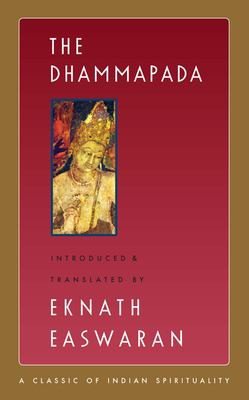
The Dhammapada
Translated by Eknath Easwaran
The most welcoming way in. Roughly half the book is introduction and context, which is exactly what a first reader needs and what a purist will want to skip.
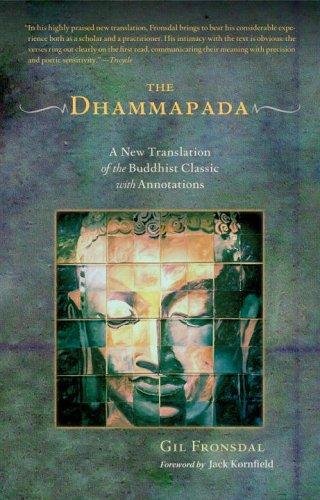
The Dhammapada
Translated by Gil Fronsdal
Spare, current English with the scholarship kept in the notes where it belongs. The one to buy if you want the verses to speak without a guide standing next to them.
The Dhammapada
Translated by F. Max Muller, 1881
Complete, public domain and free. Not the most accurate and certainly not the most modern, but it can be quoted in full and checked, which is why this site uses it.
The part nobody warns you about
You have picked one. Here is what tends to happen next.
The Dhammapada is short enough to read in an evening, and that is the trap. Four hundred and twenty-three verses of distilled instruction, read end to end, produce a strange flat feeling: every line is true, every line is agreeable, and by verse ninety they have stopped landing. The book was assembled as a collection of sayings to be recited and returned to, not as an argument that builds. Read it like a book and it behaves like a wall of fortune cookies, which is nobody’s fault but the format’s.
The verse quoted at the top of this page is a good example. Nobody needs it explained. Plenty of people have agreed with it for twenty years and still lose an afternoon to a grudge. The gap between understanding a line and it changing anything is not closed by reading the line again more carefully. It is closed by meeting it repeatedly, in small pieces, over a long enough stretch that it is there when you need it.
So whichever one you chose, read it slowly and out of order. If you want that already built into a year, that is the book below. It is not another translation and it is not competing with the ones above.
Ours
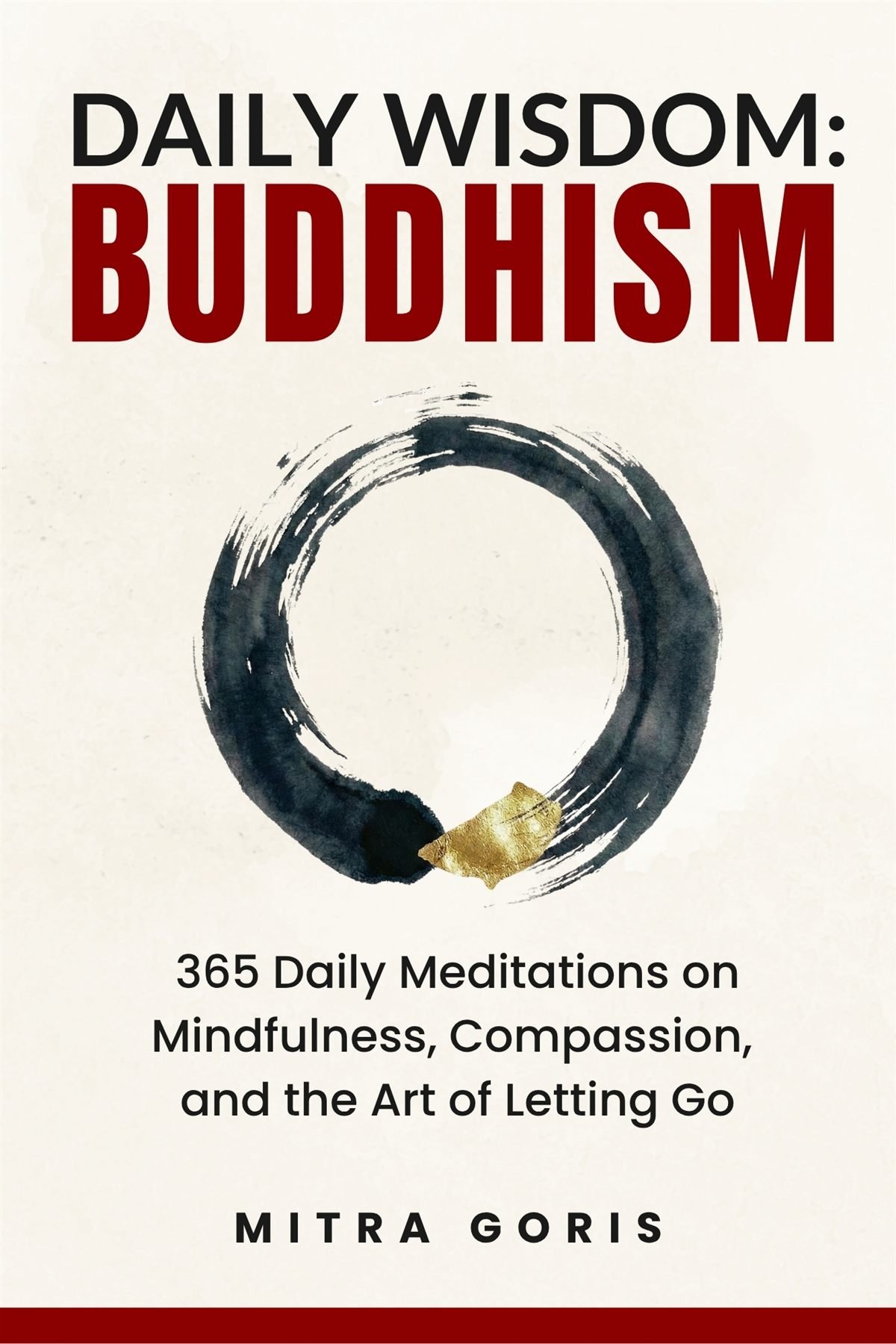
Daily Wisdom: Buddhism
Translated by One reading for every day of the year
Three hundred and sixty-five days drawn from the Dhammapada: The Insight, The Pause and a Daily Mantra. Five minutes, one page, then you get on with your life.
Where can you read the Dhammapada free?
Three places, all legal and all complete.
- Muller’s 1881 translation on Project Gutenberg.
- Buddharakkhita’s translation at Access to Insight, published by the Buddhist Publication Society and given away deliberately.
- Thanissaro Bhikkhu’s translation, at the same place, offered on the same terms.
Muller is the version used in Daily Wisdom: Buddhism, and it is worth being straight about why: not because it is the best of the three, which it is not, but because it is public domain and can be quoted in full and pointed at. A book that quotes a translation you cannot go and read is a closed loop.
If you would rather start with a practice than a purchase, there is a note here on building a five minute morning reading.